Sandblasting Air Compressor Requirements Explained
Sandblasting is hungry for air. Match your nozzle size to compressor CFM and PSI, and keep the air dry, to blast faster with less abrasive waste.
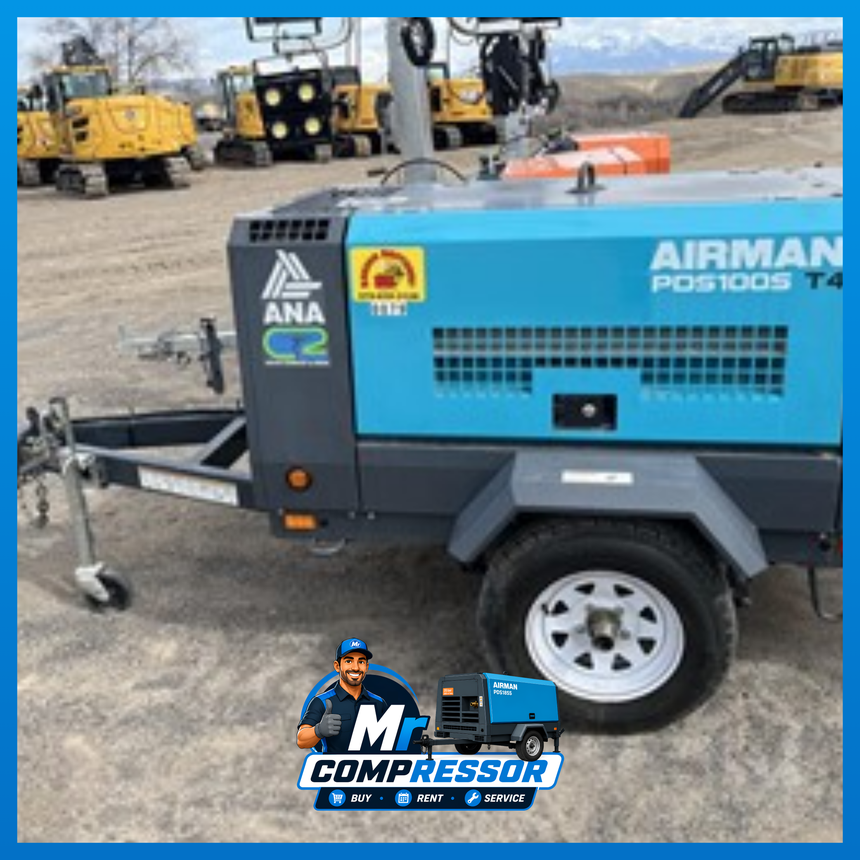
Sandblasting Demands Serious Air
Of all compressed-air jobs, abrasive blasting is one of the thirstiest. Undersize the compressor and the work crawls, wasting time and abrasive.
Getting CFM, PSI and air dryness right is the whole game.
Nozzle Size Drives CFM
The bigger the nozzle, the more air it swallows. A small nozzle may need 50–80 CFM; a large one can demand 250 CFM or more at 100 PSI.
Pressure Drives Speed
Blasting speed rises sharply with pressure. Most production blasting runs at 90–100 PSI at the nozzle — not at the compressor, so account for hose loss.
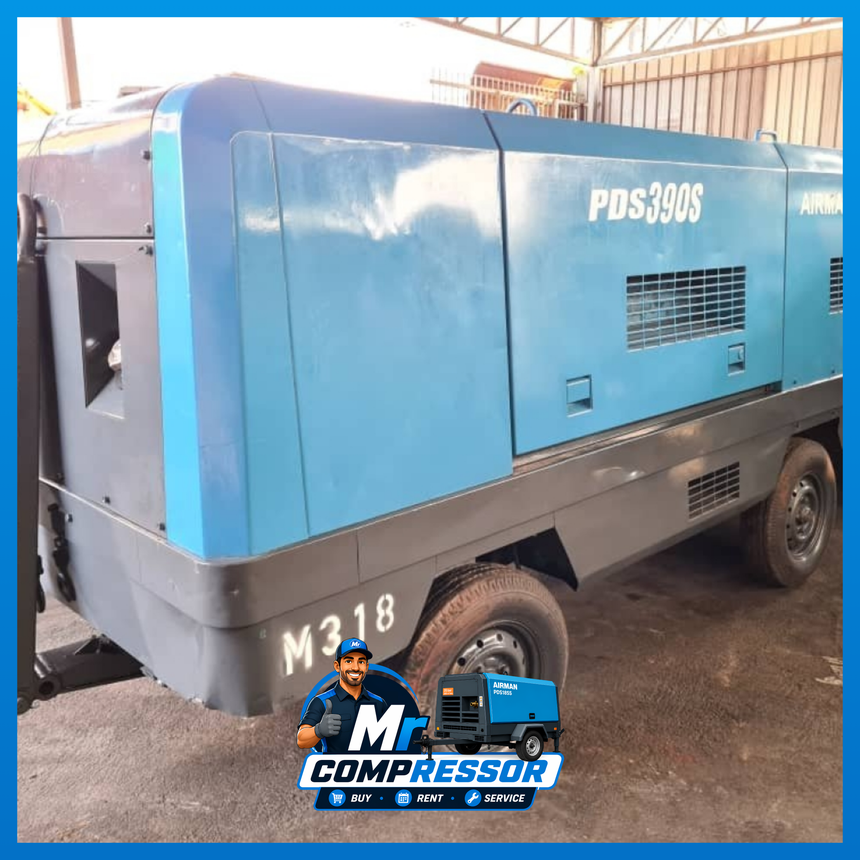
Match the Machine
For medium nozzles, a unit around 375–400 CFM such as the Airman PDS400S keeps pressure steady. For larger work, plan for headroom.
Always size for nozzle pressure, then add for hose and fitting losses.
Why Dry Air Matters Most Here
Moisture clumps abrasive, clogs the pot and ruins the surface profile. An after-cooled unit like the PDS375DP delivers drier air for cleaner blasting.
Practical Tips for Malaysian Sites
Blast early when humidity is lower, keep hoses short, and check the moisture trap often in our climate.
- Use the largest hose ID your setup allows
- Keep the compressor cool and the cooler clean
- Drain moisture before and during the job
Get the Right Blasting Compressor
Tell us your nozzle size and we will match the exact CFM, delivered across Shah Alam and Johor Bahru.
Conclusion
Sandblasting rewards generous CFM, steady pressure and dry air. Size for your nozzle, keep losses low, and choose an after-cooled unit when finish quality counts. See our CFM sizing guide for the full method.
Need an Air Compressor?
Get a fast quote for buying or renting a genuine Airman compressor anywhere in Malaysia.
WhatsApp Now